I turned complex B2B systems into scalable, modular flows and interfaces for Airbus, Delta Air Lines, Finnair, American Airlines, Qantas, KLM Air France Group, Microsoft, and others. I used object-oriented UX (OOUX) to give the underlying complexity a clear, adaptable structure.
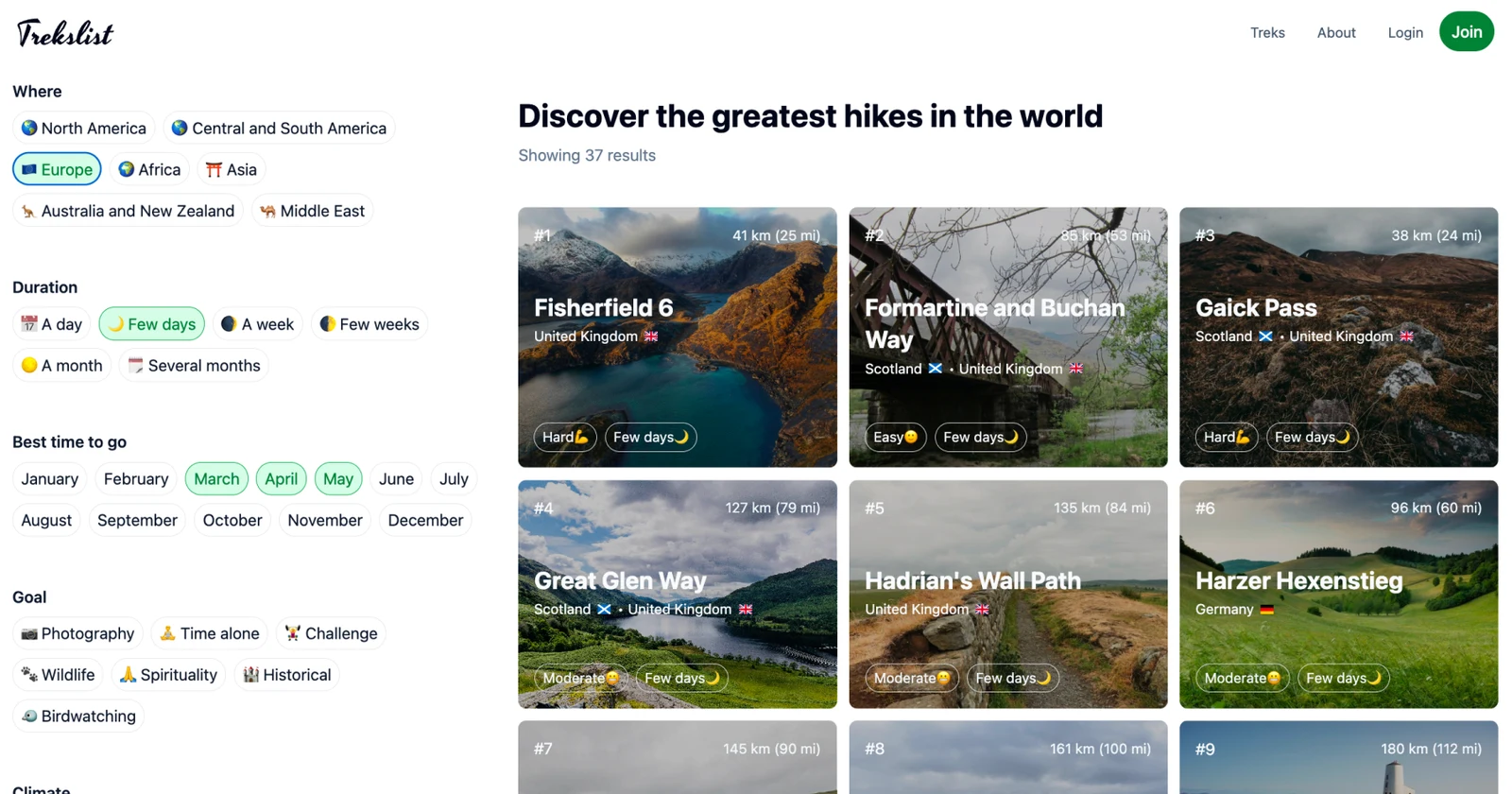
I created Trekslist to help long-distance hikers discover their next destination and connect with people who shared their passion. What began as a passion project was acquired by Whympr (Pahada Group) in 2025.
Full-Stack Product DesignerFreelance
2019 - 2025Remote 🌎
I supported product teams at companies including Zalando, Blockdaemon, Speechify, and Espresso Systems. My work spanned the full product journey, from research and strategy to end-to-end product design.
I worked alongside exceptional designers and business leaders to create digital products and ventures across finance, banking, healthcare, the public sector, automotive, FMCG, and other industries. Several of the teams I was part of went on to win awards for their design and product work.
Co-Founder, CPO, CEOWonders
2014 - 2016San Francisco, USA 🇺🇸
I co-founded Wonders, a Techstars-backed venture with a simple goal: to bring millennials closer to nature. I designed a product that received enthusiastic user reviews, attracted broad press coverage, and was featured in Apple’s App Store—and when its review process stalled, I even emailed Tim Cook to move things along. It worked. 😅
In 2025, I joined Chooose AS as Lead Designer to help shape one of the market’s leading platforms for managing and distributing sustainable aviation fuel, known as SAF.
Chooose works with some of the world’s most significant aviation and enterprise companies, including Airbus, American Airlines, Delta, KLM/Air France, Qantas, Microsoft, McKinsey, DHL, Mastercard, and others. The product challenge was both commercially important and environmentally meaningful: helping companies reduce and account for the climate impact of aviation, a sector responsible for roughly 2–4% of global emissions.
The work was highly complex. We were building one of the first systems of its kind: a platform capable of supporting many different SAF supply chain models, while also handling environmental attributes, emissions-reduction accounting, legal and regulatory frameworks across markets, and scalable downstream white-label distribution for clients with very different needs and brand systems.
At the same time, the company had several legacy systems that needed to be consolidated into a single, coherent product experience.
It quickly became clear that a conventional “double diamond” design process was not enough for this level of domain complexity. To strengthen the product strategy and information architecture work, I enrolled in a certification course in Object-Oriented UX, a methodology specifically suited to complex systems, platform products, and multi-stakeholder environments.
This became a valuable foundation for the work. It helped me create a shared product language across the organization, aligning product managers, engineers, domain experts, stakeholders, and leadership around the core objects, relationships, workflows, and business rules of the platform.
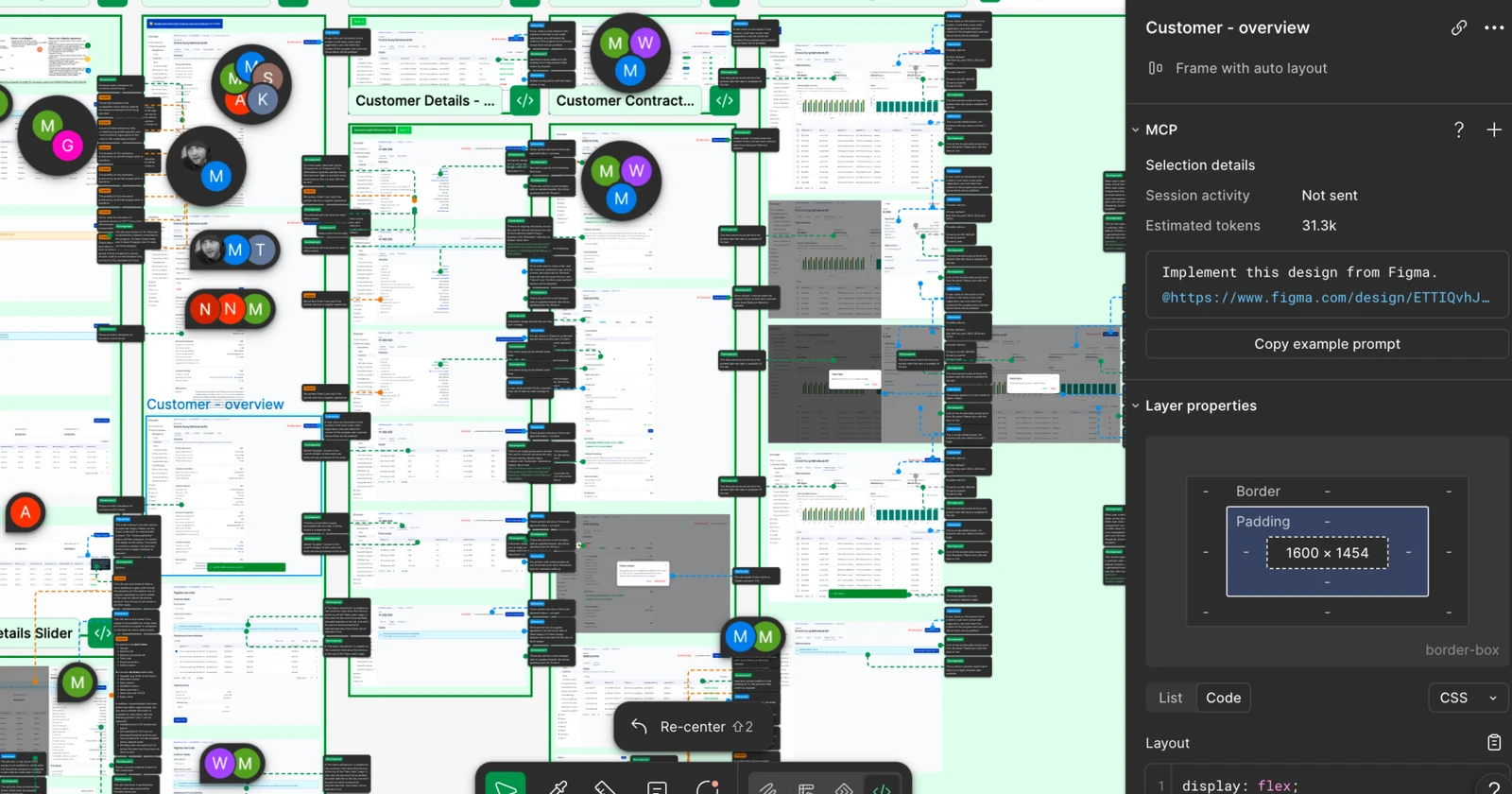
Alongside the core product design work, I also helped guide the company’s transition toward a more AI-enabled product and design workflow, using tools such as Claude Design, Figma, Claude Code, and related systems to improve how we explored, specified, designed, and built product experiences.
Most of the work remains confidential, but selected screenshots are included below.
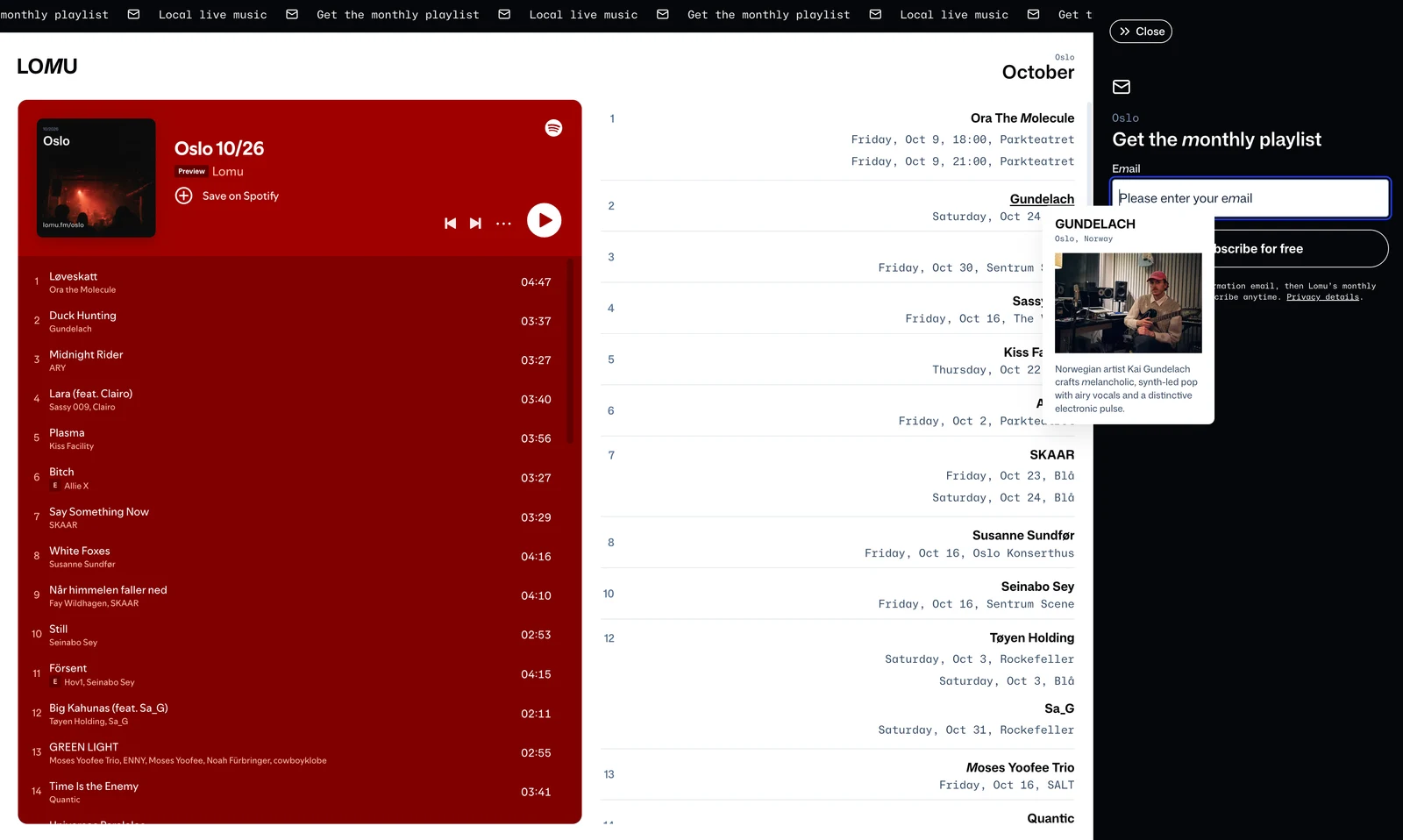
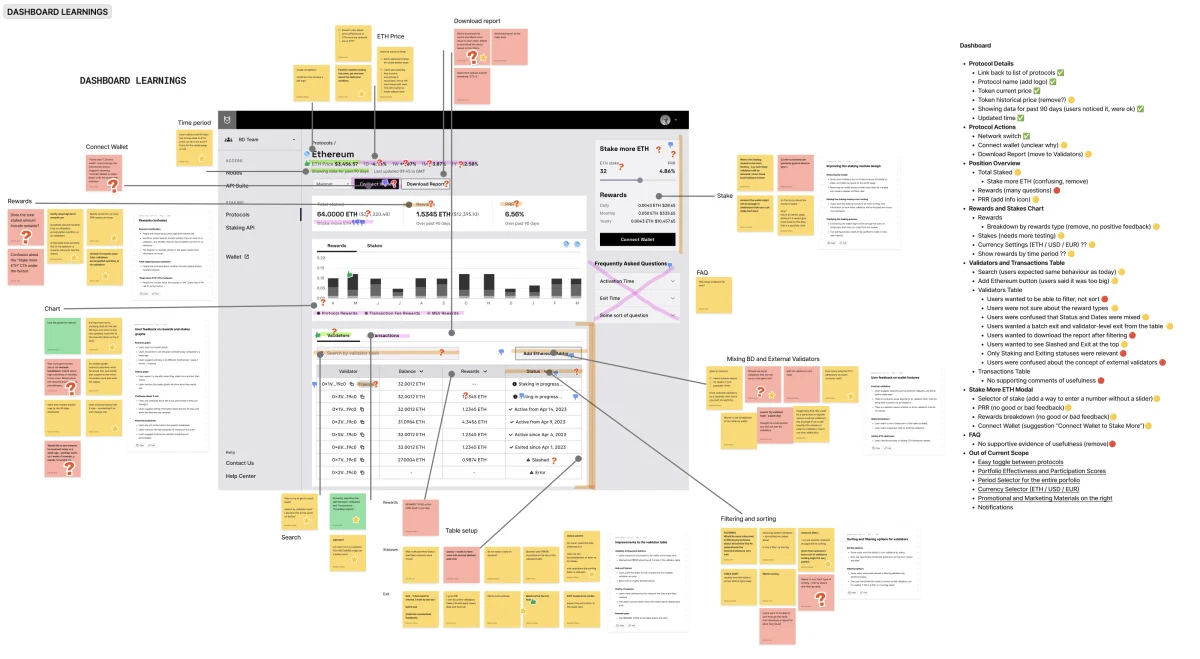
A key challenge was making the complexity of SAF understandable to non-experts. After months of iteration, we shipped a product that combined deep domain capability with a simple, scalable user experience. Client branding could be adapted efficiently through a controlled white-label design system.One of the most valuable design activities was auditing and documenting the key objects in the system: their attributes, relationships, actions, and states. This helped the team clarify priorities, clean up inconsistencies, and improve the details that make complex products usable, from tooltip copy and input constraints to error and empty states. In addition, it created a shared product language for the entire company.Once the few central system objects and their relationships have been documented, I focused on building a system for expressing instances of those objects in 3 main forms - tables, cards and pages. This is an example of a page-level template that several objects shared with intentional visual variations to easier communicate the object differences.Navigation presented a particular challenge in designing this platform, with multiple navigation elements (hierarchical nav-bar, breadcrumbs, local tabs and/or back buttons) often present at the same time. In addition here one can see how the team attempted to organize a vast number of object attributes, metadata and relationships using tabs and groups, while keeping key object CTAs consistently visible at the top.Working within bureaucratic systems one had to pay special attention to the quality of forms.Designing in this level of complexity was largely an act of facilitation: helping domain experts articulate their knowledge, structure it clearly, and translate it into prototypes of increasing fidelity. Even with advances in AI-assisted design tools, I found that early-stage thinking was still most effective on paper, where ideas could stay fast, rough, and collaborative.I was also one of the two designers keeping on maintaining our Figma design system. Here are some examples of our table component. Detailed documentation later made it much easier to gather the relevant context for Claude Design and other agentic AI design tools.During my time at Chooose, I have also been experimenting heavily with various agentic design tools and workflows. In this example, I first asked Claude to gather all the relevant feature-related documentation from across Slack, Notion, JIRA, GoogleDocs and other resources. I then asked a separate agent to spin-off three new agents - one to write a “vision” PRD, one to write the “v0” PRD, and 1 to check whether the PRDs matched our existing technical infrastructure and primitives, and provide feedback to the PRD agents if it hadn’t.After several loops of PRD work using high-reasoning frontier models, and human QA, I now had very high-quality PRDs which I then simplified for Claude Design prompt to produce conceptual mockups that we could show to customers.
Designing for Complexity to Advance Sustainable Aviation Fuels · Martin Ahe